On The Shelf: Sculpture or Ornament?
My grandmother ran a boarding house next door to the town police station. Her lodgers were mainly policemen, other working men just starting out in life, and the occasional travelling salesman. Lining the walls of her dark, linoleum-floored passage were a series of child-sized girl figures holding charity collection boxes labelled: ‘The Blind’, ‘Action for the Crippled Child’, and ‘The Spastic Society’ (the latter two held by a child in callipers).
These somewhat unsettling figures, normally placed outside shops in town centres, were made of fibreglass, plaster, or composite materials and painted in dubiously realistic colours, complete with huge bows in their hair. To my six-year-old self, they always had a look of expectancy, no doubt due to the proffered collection boxes, and paradoxically, a vocalness in their silence. What the lodgers made of them, I’ll never know. In a small town devoid of galleries, they were my first introduction to figurative sculpture.
So when a sculpture tutor many years later suggested that there was a difference between a sculpture and an ornament, these charity box figures were the first images that came to mind. They puzzled me. Their practical function seemed to categorise them as craft objects, yet when removed from their intended context and standing sentinel in my grandmother’s home, they became highly finished and self-contained ornaments. And yet today, because of that shift in context and their rather dominant presence, they might well be considered sculptures – objects, like Duchamp’s urinal, that live beyond their intended application and draw the viewer into further speculation. The matter is not straightforward.
I tend to think of a successful sculpture as something that continues to live beyond its physical completion; an object that sustains a viewer’s interest and carries a questioning, almost transcendent spirit. Artists are often asked how they know when to stop working on a piece. My answer is that, in the process of making, you learn to recognise the point at which the material risks becoming dead in the hand, overworked, over-resolved, unquestioning. In other words, finished. It has lost its spirit. To my mind, a good sculpture is never truly complete; completion risks turning it into an ornament.
An ornament, by contrast, is often commercially well finished and frequently mass-produced, it can tell a story or illustrate a poem (think of china shepherdesses). It asks little of the viewer beyond an appreciation of the skill with which it is made, its beauty, or its humour. It is something pleasant to have on a mantelpiece: easy to look at, easy to ignore, and ultimately unchallenging. In that sense, it is a closed system. Sometimes it is a knick-knack bought to commemorate a holiday or tourist attraction, or a designer object picked up in a boutique. Ornaments are often chosen for the delight they bring and may carry sentimental value for their owner. I am not convinced that the kind of sculpture I describe earlier evokes quite the same response.
That said, ornaments are not always so easily defined. Sculpture, whether abstract or figurative, can slip into this category too. Think of the ubiquitous polished stone or marble chunk with a large hole through it, perched on a plinth, quietly implying a depth it hasn’t quite earned. You see them everywhere in gallery gift shops, corporate lobbies, sculpture parks, usually framed as meditations on harmony, nature, or balance, often with a faintly borrowed yin–yang sensibility. Variations abound: the oversized acorn or plant pod, the endlessly twisting ribbon, the abstracted wave. Smooth, tasteful, and immediately legible, they signal meaning rather than invite it. I’m not suggesting that sculpture must be challenging, badly made, or obscure. Rather, that good sculpture possesses an essence or life force – a kind of ‘livingness’ that extends beyond its making. Perhaps this arises from the process itself, which is one of continual enquiry, an attempt to give visual form to something still being explored.
Unlike most ornaments much sculpture today engages with contemporary socio-political concerns. These are, to my mind, largely compelling when those preoccupations are not overt. When they remain quietly present, waiting to be discovered, free from didacticism or moralising, they invite deeper contemplation. Such concerns should be a servant to the formal qualities of the work: shape, form, and three-dimensionality, which remain central to successful sculpture. And if the viewer does not grasp the artist’s original intent, that does not necessarily constitute failure because the energy/spirit of the piece endures.
The question of ornament versus sculpture, continues to hover at the edge of my thinking as I make and assess my work. It keeps the process sharp and exploratory. It should be emphasised though that in examining the distinction, there is no inherent value judgement about which is better or more desirable. It’s horses for courses.
To add another minor (!) addition to the argument, I must admit to having always enjoyed the painter Ad Reinhardt’s remark: “Sculpture is what you bump into when you back up to see a painting.” Ouch.
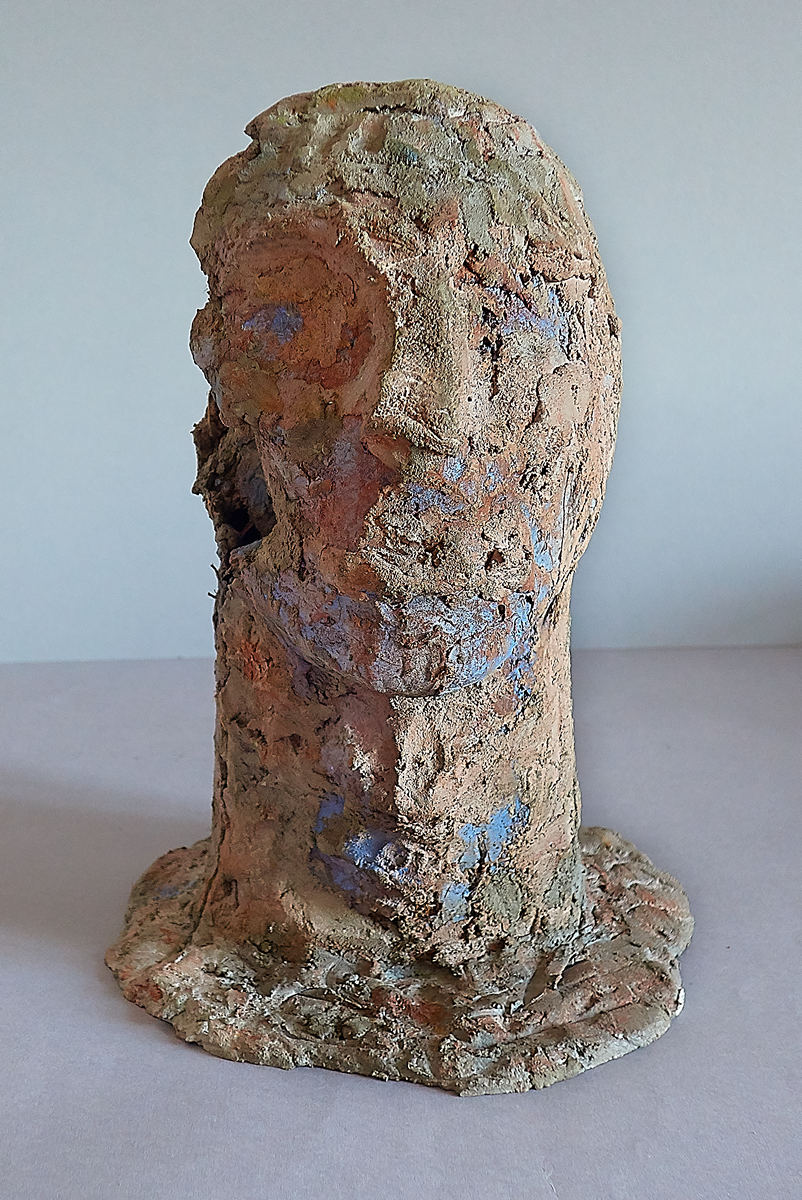
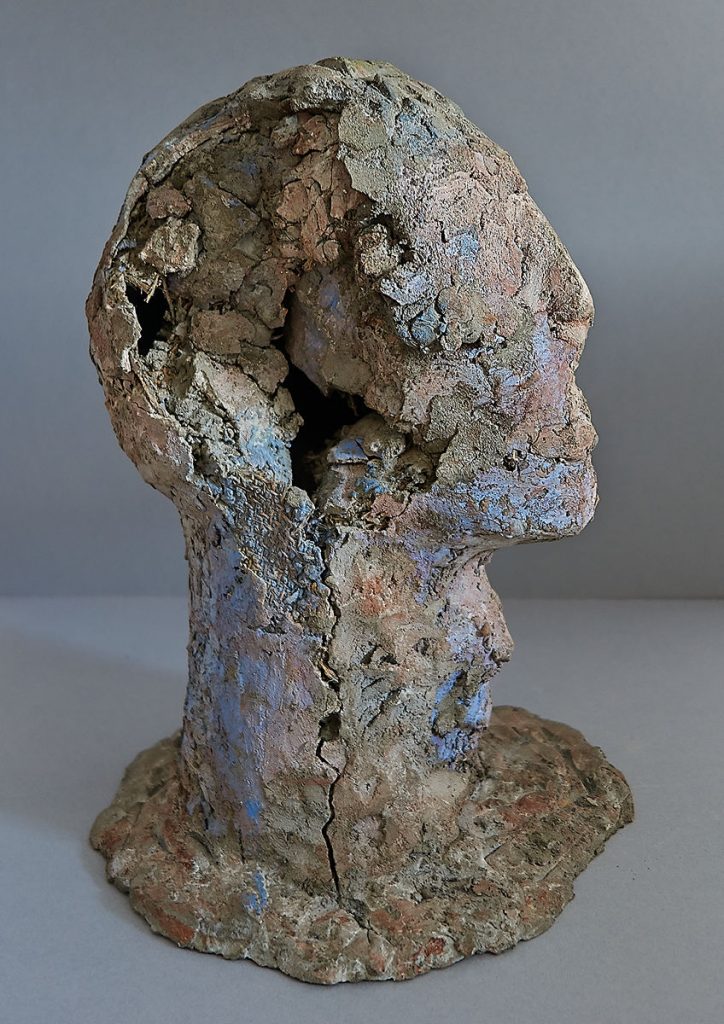
RAZED, concrete